Approx. 9 min read · 1,910 words
The TMS vs WMS Question Most Logistics SMEs Get Backwards
Talk to any growing logistics business in India, the UK, or Australia, and the same conversation surfaces every quarter: they need software, the spreadsheets are breaking, and someone has whispered "you need a TMS" or "you need a WMS." The TMS vs WMS decision is where most logistics SMEs lose six to twelve months of momentum, usually because they pick whichever system the loudest vendor pitched first.
The honest answer? It depends on where your money actually leaks. If you bleed cash on routing, fuel, and missed delivery windows, a transport management system (TMS) saves you first. If you bleed cash on inventory shrinkage, mis-picks, and overstaffed picking lanes, a warehouse management system (WMS) earns its keep faster. Pick the wrong one and you will spend year two unwinding the integration mess.
We have sat on both sides of this conversation. Once with a 38-truck regional fleet in Hyderabad whose owner was sure WMS was the priority, and twice with mid-sized 3PLs in the UK who burned cash on TMS when their warehouse was the actual bottleneck. The pattern is consistent: people pick the system that matches their job title, not their bottleneck.
What TMS and WMS Actually Do (in Plain Operator Language)
A TMS handles everything between the warehouse dock and the customer's door. Route optimization, carrier selection, freight rate management, dispatch, real-time tracking, proof-of-delivery, and EDI or API integrations with shippers. The biggest TMS wins for logistics SMEs are fewer empty miles, automated rate comparison across carriers, and dock scheduling that stops trucks queuing in your yard.
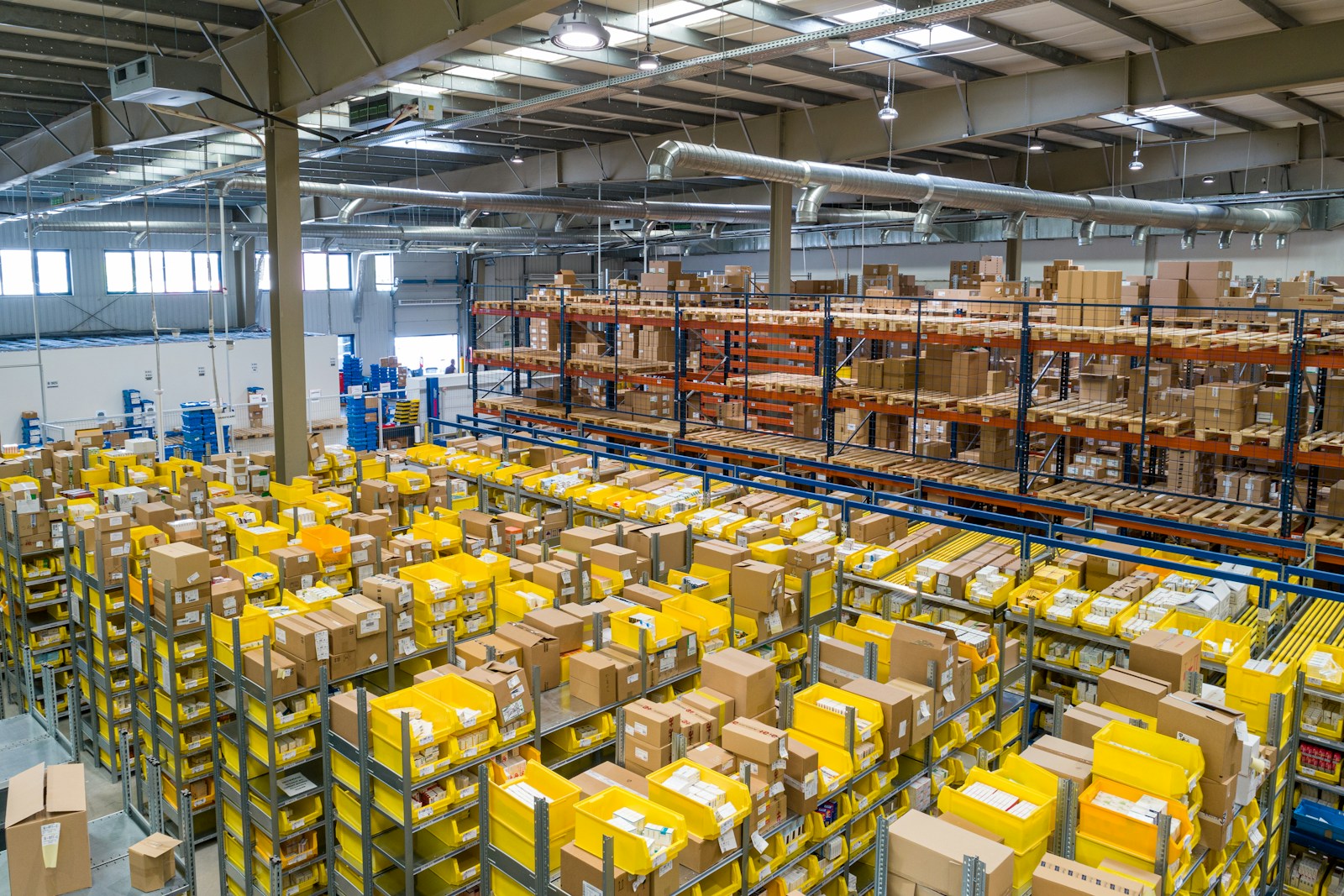
A WMS handles everything inside your four walls. Inbound receiving, putaway logic, slotting, cycle counts, wave picking, packing, and outbound staging. Real WMS wins look like 99%+ inventory accuracy, picker productivity climbing 25 to 40%, and the ability to actually onboard a 3PL client without flying blind.
Honestly, most of the "TMS vs WMS" confusion is a vocabulary problem. Vendors stretch their feature lists into each other's territory: a TMS will claim to do basic warehouse staging, a WMS will claim it does route handoff. In production, the line is sharp. One system is the source of truth for trucks and shipments. The other is the source of truth for SKUs and locations. You need both eventually. The question is which one first.
The Decision Framework: Diagnose, Don't Default
Before you sign anything, run this 30-minute diagnostic with your operations lead. We use the same one with our logistics SME clients before we recommend a stack.
- Where do customer complaints come from? Late delivery points to TMS. Wrong, damaged, or missing items point to WMS.
- What is your largest variable cost line? Fuel and per-mile freight point to TMS. Warehouse labor, shrinkage, and 3PL chargebacks point to WMS.
- Where do your ops managers spend their day? On the phone with drivers and carriers is a TMS problem. On the floor counting bins and arguing with pickers is a WMS problem.
- What is the dollar value of inventory sitting at any moment? Above the rough equivalent of $250K (or 2 Cr, or 200K), WMS pays back faster.
- What is the daily shipment count? Above roughly 200 outbound shipments per day with multi-carrier routing, TMS earns its keep.
Score it honestly. If you tilt 4-to-1 toward one side, build that first. If it is a 3-to-2 split, build the one your operations lead can sell internally. Adoption matters more than feature parity at this size.
The comparison table below summarizes the two systems side by side. It is the version we share with founders and ops leads before they sign anything.
| DimensionTMS | ||
| Primary scope | Truck, route, carrier, shipment | SKU, location, pick, pack |
| Top KPI moved | On-time delivery %, freight cost per mile | Inventory accuracy %, lines picked per hour |
| Typical SME ROI window | 4 to 9 months | 6 to 12 months |
| Integration must-haves | EDI/API with carriers, GPS providers | Barcode/RFID, ERP, ecommerce platforms |
| Common failure mode | Driver app adoption stalls | Putaway rules ignored by the warehouse team |
| Build-vs-buy reality | Buy and customize the dispatch logic | Buy if standard; custom for unusual SKU rules |
The build-vs-buy row is where we see the most regret. Off-the-shelf TMS products like Manhattan Active, Project44, or 3GTMS cover 80% of standard freight flows. Off-the-shelf WMS products handle vanilla pallet-in and case-out warehouses well. The moment your business does something genuinely unusual, like kitting, lot or batch tracking, cold-chain compliance, or multi-client 3PL billing, the off-the-shelf product turns into an expensive constraint. That is the build conversation, and it is where our SaaS engineering team often gets pulled in.
Real Numbers from Three Logistics SMEs We Have Worked With
We have helped logistics businesses in three different shapes over the last 18 months. The numbers below are anonymized but real.
Case 1: Regional 3PL, India (38 trucks, 40 Cr revenue). Owner wanted a WMS first. Diagnostic showed 62% of complaints were route-related; warehouse accuracy was already 97%. We pushed TMS first. Six months in, the empty-mile rate dropped from 22% to 12%, on-time delivery went from 82% to 94%. WMS came as phase two, ten months later, focused on cycle counts and dock scheduling.
Case 2: Ecommerce fulfillment SME, UK (one 4,500 sq m warehouse, 1,200 daily orders). Founder was certain TMS was needed because Royal Mail and DPD were chaotic. Diagnostic showed shipment volume was below the TMS payback threshold, but inventory accuracy sat at 91%, costing them roughly 180k a year in stockouts and chargebacks. WMS first. Inventory accuracy hit 99.4% in four months. They never built a TMS. They just standardized on two carriers and a shipping rate API.
Case 3: Cold-chain logistics, Australia (15 reefers, multi-temperature). Off-the-shelf WMS could not model temperature lanes properly. We built a custom WMS layer on top of an existing TMS. Total project ran about 9 months, AUD 280k. The custom logic saved them roughly AUD 95k a year in spoilage and cleared the compliance audits they kept failing.
The thread across all three: the right software depends entirely on which KPI bleeds money the fastest. For a deeper read on the dispatch-side gains we have seen recently, our piece on how AI is cutting last-mile delivery costs for logistics SMEs complements the TMS argument here.
What This Costs, Roughly
For mid-market logistics SMEs, off-the-shelf SaaS pricing is usually predictable. Custom builds are where the wide ranges live.
- Off-the-shelf SaaS TMS: $300 to $1,200 per truck per month, or per-shipment pricing of $0.10 to $0.40.
- Off-the-shelf SaaS WMS: $50 to $200 per user per month, plus $5k to $25k implementation.
- Custom TMS module (dispatch and carrier rules): $40k to $120k for an MVP that replaces 60% of an off-the-shelf TMS.
- Custom WMS module (slotting and pick logic for one warehouse): $35k to $95k for a usable MVP.
- Integration layer (ERP to TMS to WMS): $15k to $45k and almost always under-budgeted.
Where SMEs get burned is the integration layer. We have seen logistics businesses spend 35 lakhs on a TMS and then realise their ERP cannot pass open-order data without an SOAP-to-REST adapter someone has to write. Half the WMS go-lives we have audited were delayed three to four months because the ERP integration was scoped as "two weeks" by the vendor and turned into three months in practice. Bake an integration sprint into the original budget. Do not bolt it on later.
For an external benchmark on where the broader supply-chain software market is heading, McKinsey's logistics insights are a reasonable pulse-check, and Gartner's supply chain coverage tracks the WMS and TMS quadrant shifts each year.
How Logistics SMEs Should Sequence the Build
The pattern that works for most logistics SMEs we have worked with looks like this:
- Spend 30 days diagnosing where money leaks (the framework above).
- Pick the one system that fixes the larger leak. Buy it off the shelf if you fit a standard pattern. Build only the modules where you are genuinely different.
- Stabilize for 3 to 6 months. Adoption matters more than features.
- Layer the second system on top. Plan the integration before you sign the second contract.
- Year two: bring in lightweight analytics and predictive routing or slotting on top of clean data.
If you are sizing up this decision and want a neutral read on whether to buy, build, or wait, our logistics technology practice and IT advisory team can sit through the diagnostic with you. We do not resell either system, which keeps the conversation honest on both sides.
Frequently Asked Questions
Can we just use an ERP module instead of a dedicated TMS or WMS?
For very small operations, yes. SAP Business One, Odoo, and Microsoft Dynamics all have shipping and warehouse modules that are passable up to roughly 100 shipments a day or one small warehouse. Beyond that, the dedicated systems handle exception cases like multi-stop routes, cycle counts, and multi-carrier rate shopping that ERP modules treat as edge cases.
What is the realistic timeline to deploy a TMS for a 30 to 80 truck fleet?
For an off-the-shelf TMS, plan 8 to 14 weeks if you have clean carrier data and a reasonable driver mobile rollout plan. Custom dispatch modules layered on top typically add 12 to 20 weeks. The single biggest delay we see is driver-app adoption. Pilot with your most cooperative drivers for 4 weeks before forcing a fleet-wide rollout.
Should a 3PL use the same WMS as its largest client?
Usually no. 3PLs need multi-tenant WMS features (separate billing, separate inventory views, separate SLAs per client) that single-tenant client WMS products do not handle well. The exception is when the client is 70% or more of your revenue, in which case mirroring their stack reduces friction.
How do TMS and WMS integrate with last-mile delivery apps?
Most TMS products have native integrations with Shipsy, LogiNext, FarEye, and Onfleet for last-mile dispatch. WMS systems pass pick-confirmed shipments to the TMS via REST API or webhook, and the TMS then hands the routed loads to the last-mile app. If you are starting from scratch, make sure the TMS you pick has a documented webhook spec, not just an SDK.
Where does AI fit in the TMS vs WMS decision?
AI lives on top of clean operational data, not under it. A well-instrumented TMS produces the route history, fuel data, and on-time signal that an AI dispatcher can actually learn from. A well-instrumented WMS produces slotting and demand data that AI slotting engines can use. Build the operational layer first, then layer AI on top once the data is reliable.
Final Take
The TMS vs WMS decision is not about which system is more advanced or which vendor pitched harder last quarter. It is a diagnostic question dressed up as a software question: where is your money leaking faster, on the road or inside the warehouse? Build the one that plugs the bigger hole, stabilize it, then layer the second system in. Skip the diagnostic and you will spend year two paying integration consultants to undo year one's enthusiasm.
If you would like a second opinion on which to build first, our team runs a short, no-pitch logistics diagnostic. Schedule a logistics architecture review with our team and we will help you stress-test the decision before you sign a contract.